

READER WARNING: This article contains heavy spoilers for both Red Dead Redemption, and Red Dead Redemption II.
Note: I originally drafted this shortly after playing Red Dead Redemption in 2010. I’m pleased to be able to update it with context for Red Dead Redemption II, as the post-story modes to both games have ample room for discussion and meaningful comparison. Although mechanically and even thematically similar, they accomplish very different things.
I. Red Dead Redemption II
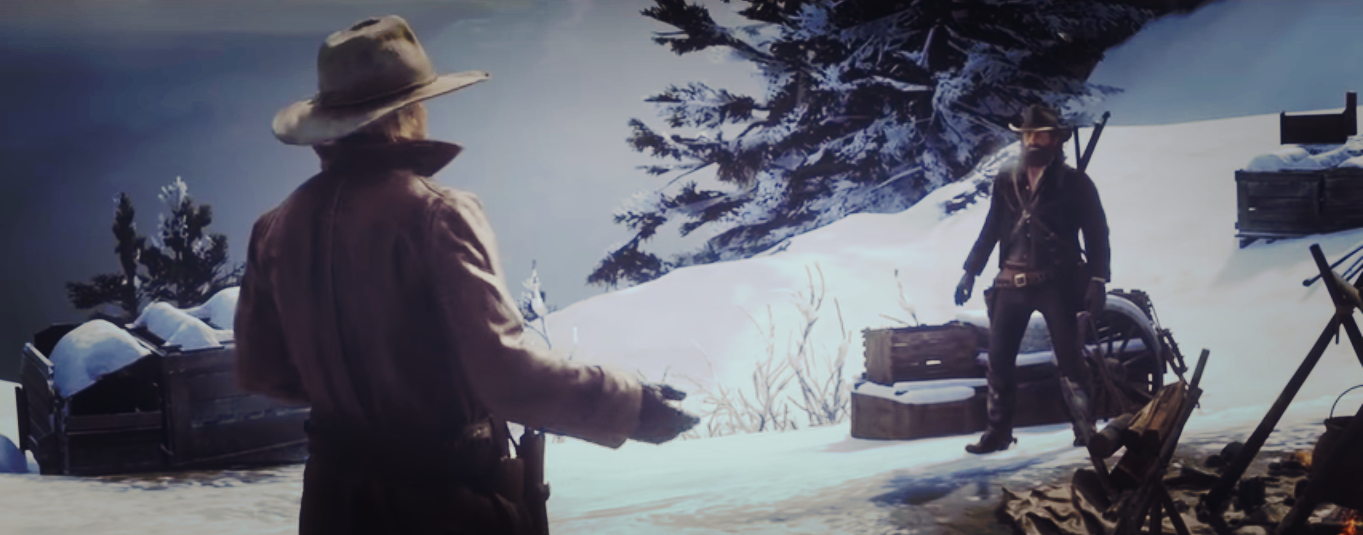
Something I had not necessarily expected for the Red Dead Redemption prequel was the inclusion of another post-story mode. It wound up being a truer Epilogue, with significant plot points in addition to opportunities for side mission completion and stats-building. While the sharp pivot from Arthur’s emotional ending caught me off guard, I also can see likely reasons why the plot was structured this way, and not as, say, an optional DLC. But that’s another discussion.
Arthur’s story of course comprised the foreground for this game. And his evolution is as brilliant as it is heart-wrenching. I often wonder how things might have unfolded differently had the encounter with Downes never happened. Arthur would not have contracted his disease, but to what extent would his perspective have shifted through the course of the game otherwise, in what ways would it have? That’s a topic for a separate essay, but I can’t ever shake the subject from my mind.
Nevertheless, his physical deterioration compels him to grapple with who he has been, and who he wants to be before he dies. As Dutch’s increasingly deluded leadership proved disastrous for the gang, Arthur had another fateful choice to make.
For all of his bitterness over John’s year long absence and seeming lack of loyalty and responsibility, Arthur likewise comes to believe that John has the best chance of building a new life beyond the gang. It therefore becomes Arthur’s personal mission to see that this comes to fruition, taking it as far as he can before entrusting the rest to others just prior to his death.
In this way, Arthur’s legacy is elevated, and he posthumously achieves his own sort of reckoning. He has fought through his last labored breaths to do the right thing, and he dies on the mountain knowing that John, Abigail, and little Jack can move on. Something good had to come from all of the suffering and death. He made sure that it did.
However, while Arthur’s story is in the foreground, John’s story is not entirely in the background. Nestled within the overarching narrative is how he slowly but surely begins growing into the man who is worthy of such precious efforts. The John we know from Red Dead Redemption is not always the John we witnessed in the prequel. Sure, the brash nature is familiar, but there is an undeniable immaturity to his younger self that draws criticism and consternation from Abigail and Arthur alike. John struggles to bond with his son, Jack, for more than one reason. And he complains, sometimes at grudging length, about his relationship with Abigail. Given his childhood and life experiences, it’s not surprising he finds both connecting and committing emotionally to be challenging.
Nevertheless, John’s development occurs in parallel with Arthur’s as he, too, begins questioning Dutch’s decisions and the gang’s trajectory. Near the end of the main story, he suffers a betrayal he cannot forgive. But even before this occurs, he comes to something of a shared understanding with Arthur, who tells him to flee with his family when the time comes. Because it’s all truly over.
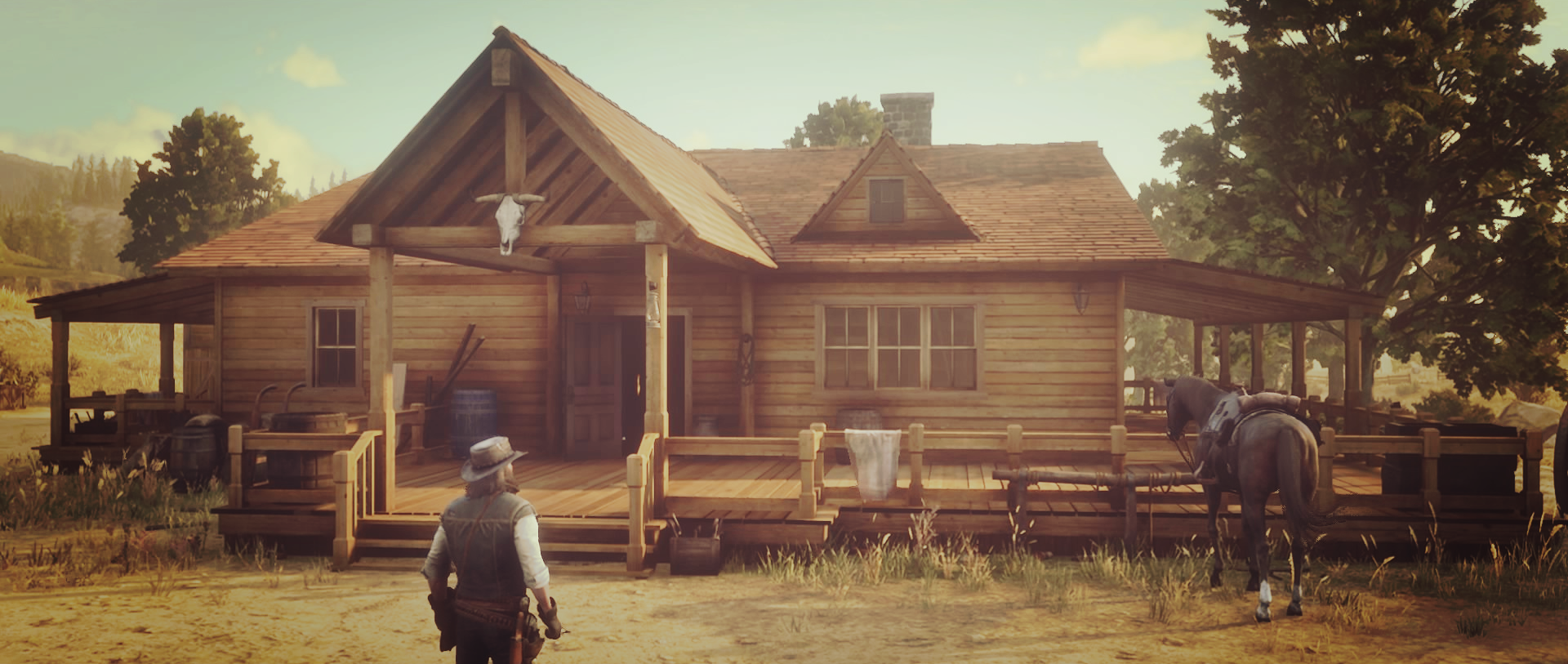
Several elements make Redemption II’s Epilogue a much deeper experience than Jack’s in Redemption. First, and perhaps most obviously, missions and cutscenes flesh out the time between the gang’s disbanding and John’s new beginning. Many of the missions are constructive: over time, he learns how to be a rancher, how to navigate the more unfamiliar territory of everyday “honest” life, and eventually, he learns to further embrace his role as a devoted family man. Interspersed with these tasks, John even has the opportunity to encounter surviving gang members, as well as Rains Fall – all of whom aside from Pearson are headed elsewhere. For me, there’s an underlying sadness in each all-too-brief reunion, because it’s likely the last time they will see John Marston alive.
Most importantly, all of this builds up to something, something both tangible and sacred. There was long a fierce protectiveness on Arthur’s part for Jack, and it was clear that the Marstons’ escape was just as much about giving the little boy a real chance to grow and thrive beyond the chaos. And indeed, once the small family reunites and settles into the new ranch, it almost feels as if their slates have been wiped clean. That if they keep their heads down, they can live out their remaining days and years in relative peace. Even knowing full well the events of Redemption, it nearly feels like this new stability is destined to last.
When Sadie eventually arrives at Beecher’s Hope with news of Micah’s whereabouts, it is akin to a siren’s song. Her leads promise the opportunity for revenge, the opportunity to avenge the fallen. But these are the very things against which many have warned in both overt and subtle ways.
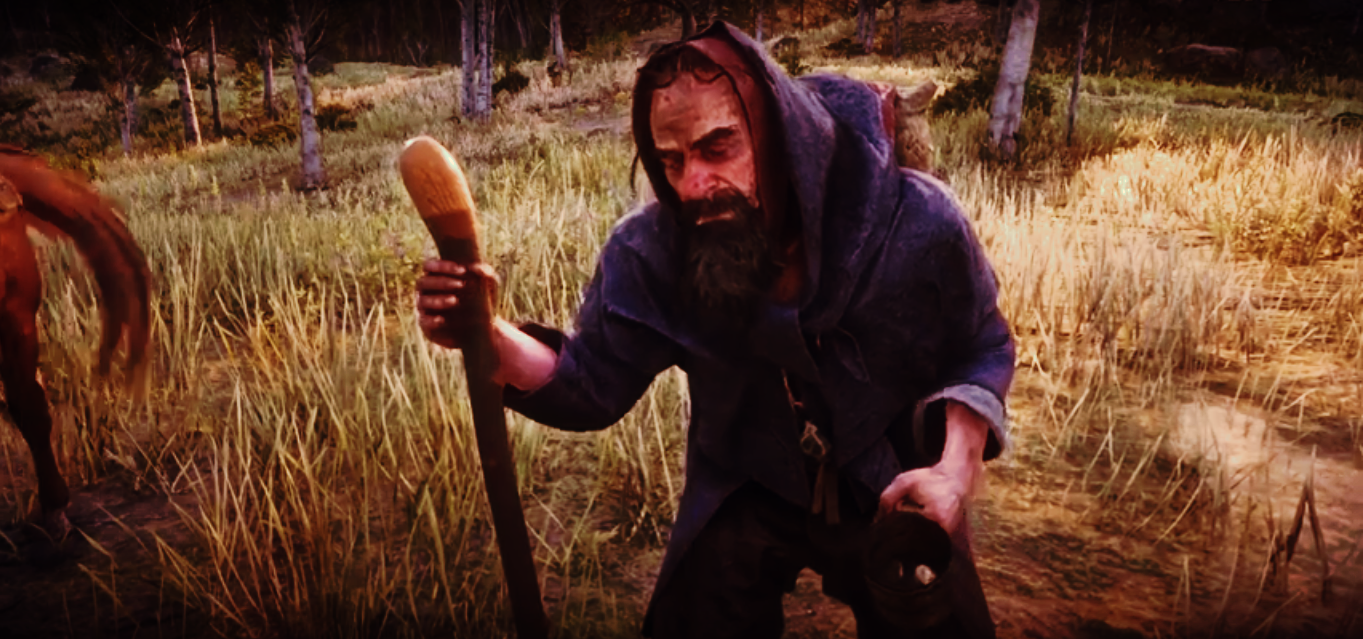
For example, the mysterious blind man you encounter along the road warns over and over again the price for taking such action. He tells John that he “remembers the past at the expense of the future”, and that he should embrace those who love him, “not the memory of those who pretended to”. John’s pursuit of revenge is clearly alluded to in the old man’s words. Despite his determination to move forward, he cannot quite sever his emotional ties to the past. It’s a momentous choice, particularly as Arthur had told him to take his family, run, and not to look back.
And so he agrees to accompany Sadie and Charles to Micah’s hideout up in the snowy mountains. This decision elicits a desperate dissenting plea from Abigail, as if she could glimpse into their future and realize what this venture would reap. It was yet another moment that stuck with me, one I thought about as the credits rolled and showed Edgar Ross and Archer Fordham examining the camp on Mount Hagen. She was right to be terrified.
All in all, John’s revenge against Micah is not as straightforward an event as Jack’s was against Ross. The latter was a duel, with no known spectators. The former implicated multiple characters, two of whom make known their plans to depart the country for their own new beginnings. What’s more, Dutch’s appearance and intervention was a poetic twist, and itself a foreshadowing of a solemn reunion. In but a handful of years, the same federal agents would arrive to make one of their so-called “deals” with John. And they would not stop before their last enemy was destroyed.
Still, after the deed is done, John and the others make their way back to Beecher’s, and Abigail can breathe at least a momentary sigh of relief. After John and Abigail’s wedding, Sadie and Charles eventually leave in different directions, and the Marston family members (including Uncle) lean into their new lives. It bears recalling that John’s acquisition of Beecher’s Hope only comes as a consequence of gaining added favor of David Geddes, by fatally dispatching the Laramie Gang and saving Geddes’ ownership of Pronghorn Ranch. And even prior to that, while on an errand in Strawberry with Jack, John is forced into a gunfight with strangers. So even as John works to build anew, he cannot fully escape the violence he’d grown accustomed to while running with the old gang. And that is the curse following the family. For all of the progress they made, it cannot and will not last.
II. Red Dead Redemption
I have always found something very troubling about Jack Marston’s post-story mode. I haven’t always been able to pin it down, but the events of the prequel lend helpful perspective and make it easier to characterize. Allow me to explain.
After the final mission of the game, in which you kill Edgar Ross (and optionally two of his family members) and avenge your father, the world seems quite a bit stranger. Downright eerie. The credits roll as you process the story’s closing act. But afterward, there is no “The End” screen to confirm the finality of everything you have just accomplished. In fact, you’re left right where you were, Ross’ corpse lying in a bloodied heap along the riverbank – lootable, even. But the question quickly becomes what to do now. It’s a question I struggle with every time I reach this point.
It’s a strange feeling to be out completely on your own, no more storyline strings attached. Yes, you’re free to work toward game completion via any lingering Stranger missions and bounty hunting. And these things can certainly keep you busy for awhile. But to not have anymore bold initials show up on your map, to not ever see anyone central to the story anymore, is distressing in a way that often defied articulation. It hits me the hardest while eyeballing the map, especially when “Born Unto Trouble” is the background track of the moment in New Austin. The song itself has this surreal, vaguely mournful feel to it and it conveys the situation perfectly. It’s true, you do hear it while playing as John also. But with Jack, it’s got a different resonance.
When I’m playing as Jack and moving from town to town, I’m surrounded by ghosts. The ghosts of former allies and foes alike haunt their respective locales. Those who are very much alive, are now apparently unreachable. But what they remind me of even more so for Jack is his utter loneliness in the world at this point, despite the cool detachment he exudes as he roams. His father and mother are dead, and his father’s former allies have for all intents and purposes vanished from the landscape. As much as we sympathize with his motivations for it, he’s kicked off the rest of his life with a murder. After everything that’s happened, what will become of him in the end?
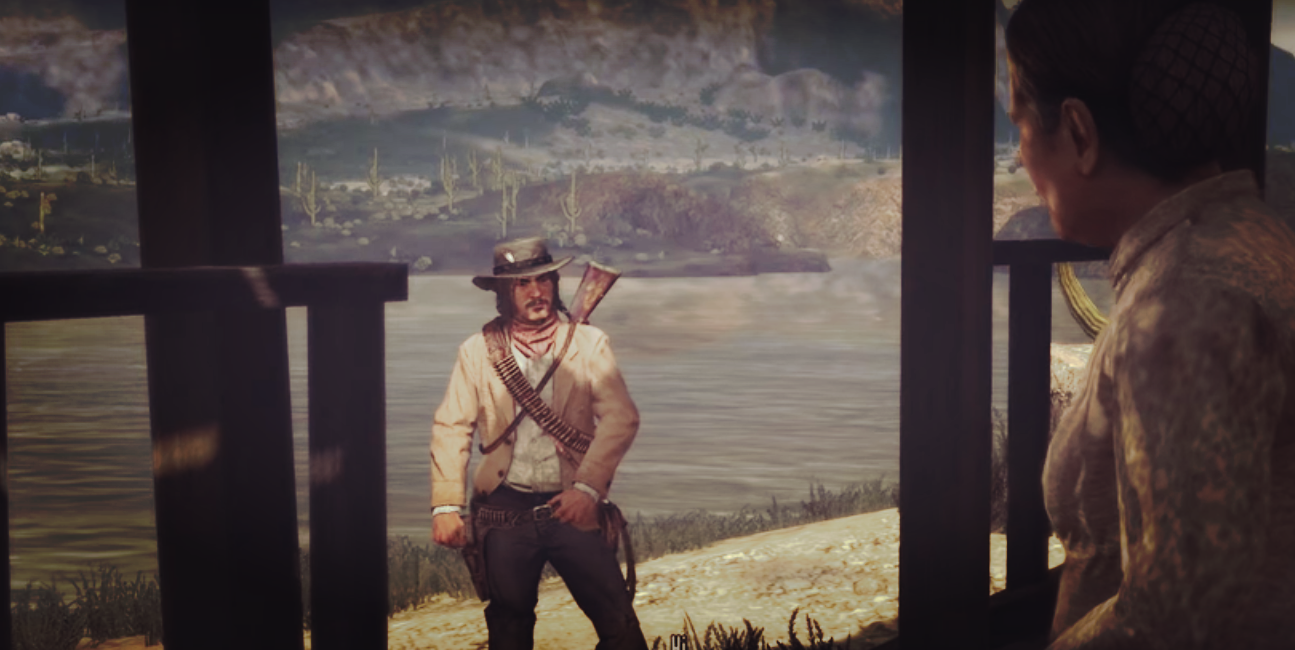
It’s a fittingly tragic rhetorical question, perhaps especially since the game never truly “ends”. There is no cut-off point, no part of the map closed. Jack can go on exploring the world helping people, collecting on bounties, and looking for treasure. He can likewise continue to raise (or lower) his honor. Really, he can follow in his father’s footsteps in most technical ways. But that’s it. Bonnie’s ranch still thrives, Armadillo remains a crossroads of colorful characters, and Reyes’ Mexico has fallen into chaos – as John worried it might. Things are both just as they were when the elder Marston traversed the land, and starkly different. The world is ever an interesting paradox.
This comes as one of the most poignant themes of the game. A vicious, violent cycle powers much of the story of the Van der Linde gang and its members. In Redemption, it’s easily seen, for example, in the events in Mexico. Riding through there, the specters of Allende and De Santa are even detectable. Newspapers after the events of the Revolution tell of a fresh but very familiar crop of problems in Nuevo Paraiso under Reyes’ leadership. And although the rich voice of old Landon Ricketts no longer echoes from the streets of Chuparosa, I can’t help but wonder what he would have to say to John’s son now. Jack is left to continue a lonely existence, and what ultimately happens to him, we can’t be certain. Based on the events of Redemption II’s main story and Epilogue, it seems possible that his actions will catch up with him in similar manner.

I do know that whenever I’m riding through the land at night, hearing no sounds but distant coyotes’ howls and my horse’s hooves on the dirt, I get chills. All of the sacrifices thus far have led here. And I’m left to wonder if Jack will go on to find some genuine peace. I wonder if he can. Even if the long arm of the law never reached him again, he is left with the memories and nightmares of that former life.
I can’t help but wonder how much of it haunts him, and whether he might hear the voices of both his father and Arthur in his mind after walking away from Ross’ bullet-riddled body. Because what haunts me the most about Jack’s Epilogue, is how empty it feels. It hasn’t built up to anything, aside from the achievement of revenge. Revenge being, as we know, one of the things Arthur had been against all of those years ago. And something that helped lead devastation to the Marston family. Perhaps I’m too pessimistic, but I’m not left with any great sense of hope for Jack. And knowing what I now know about all of those people who did their best to raise, nurture, and protect him, it makes playing as him even more bittersweet an experience.
III. A Requiem of Sorts
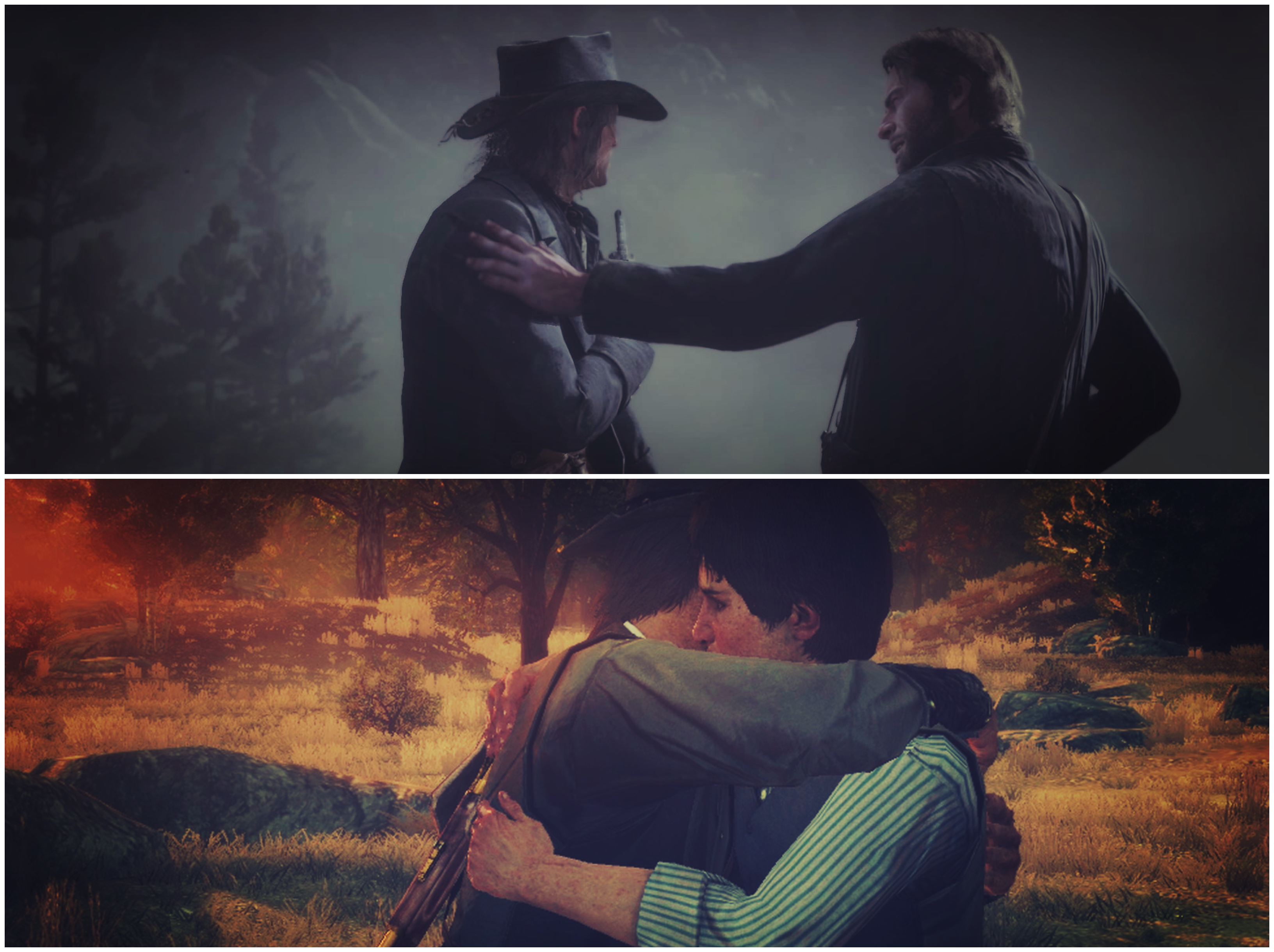
As mentioned in my opening note, I’ve had the Redemption portion of this drafted for about seven years. It always resonated with me in a profound way. With Redemption II’s Epilogue so concerned with bridging the gap between realities, it makes the tragedy of the overall story that much more pronounced.
One Epilogue is about starting over, fulfilling hopes and dearest dreams on the other side of unyielding turmoil – and it’s also about revenge. Micah finally paid for his cruelty and treachery. However, revenge can come in more than one form. John and his family escaping to pursue the happier life that Arthur wanted so much for them was a righteous rebuke of the malevolent nihilism Micah extolled with every action. Indeed, Arthur’s dream largely won out by the true ending of Redemption II. And yet, his dream is compromised by the actions of those who sincerely loved him, who cherish his memory, and wished to see him avenged. It’s quite a disheartening sequence of circumstances, but that is one aspect of the storytelling that I have always found so compelling in the Red Dead franchise.
The other Epilogue is less about starting over (though, Jack is setting out alone, newly orphaned), than it is about the unequivocal attainment of revenge. And it’s a painful notion in the face of not only everything John did to ensure Jack and Abigail would be free, but also everything Arthur and others did on John’s behalf. If Jack goes on to retire his guns and create a quiet life for himself long after we put our controllers down, that is yet to be explicitly revealed. I would love for a lore addition to address this, and to provide really any supporting context for surviving characters. I would love to know that Jack was able to avert the doomed path he flirted with in killing Ross.
For now, though, the emptiness of the world in 1914 remains palpable. And as I crisscross the map, especially after the sun’s settled far below the horizon, the magnitude of the tragedy is overwhelming. Much like when John hears the disembodied voices of Arthur and others when revisiting old campsites, I daresay I hear the same whenever I play as Jack. Of course since completing Redemption II, the ghostly voices are now even more numerous and varied. Jack’s Epilogue, for me, is a requiem.

 POIETRIA.COM